Every region of Connecticut, CT brings its own water damage risks, from coastal humidity to inland flash flooding, and our dispatch network places a licensed crew close enough to respond fast no matter which part of the state you're calling from.
Call +1-844-578-1604 Now
We built our Connecticut, CT operation the same way we build every market: hire licensed local techs first, then stock their trucks with commercial extraction and drying equipment before they ever answer a call.
Our Connecticut, CT dispatch line stays staffed around the clock, so whether the call comes from a coastal community or an inland metro, someone who understands local conditions picks up.
Beyond the technical certifications, our crews are trained to communicate clearly under pressure, because a homeowner dealing with a flooded home deserves plain answers, not jargon.

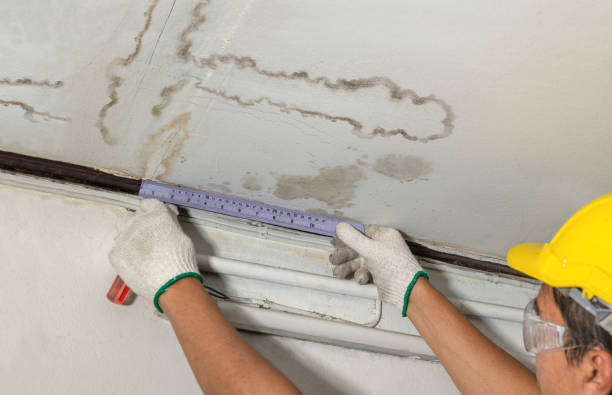
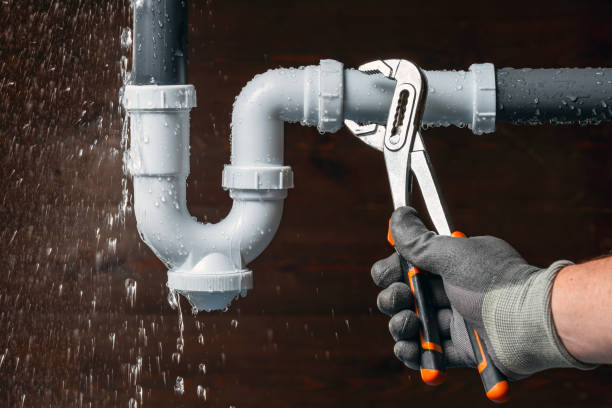
Ceiling stains near a bathroom or kitchen almost always trace back to a plumbing failure rather than a roof leak, which means the source is often closer and easier to fix than homeowners assume.
If opening windows and running a fan doesn't clear the smell within a day, the moisture source is still active and needs professional extraction, not just ventilation. A smell that returns after cleaning is a strong sign the moisture is still present.
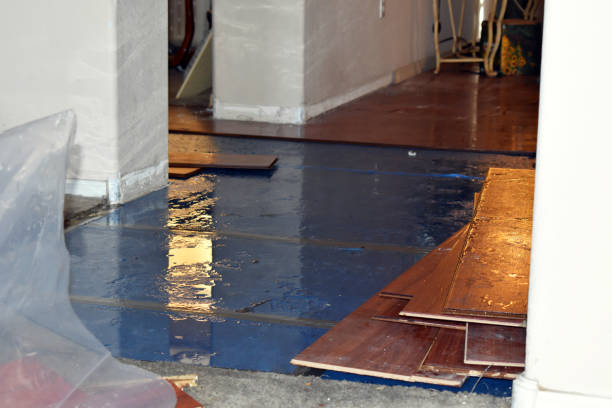
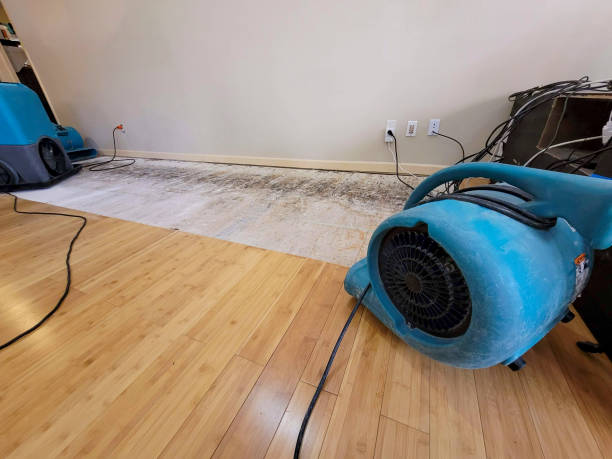
Hardwood that's cupping at the edges or laminate that's separating at the seams is a classic sign of moisture intrusion from below, whether that's a slab leak or groundwater seepage. The longer it sits, the harder the flooring is to salvage.
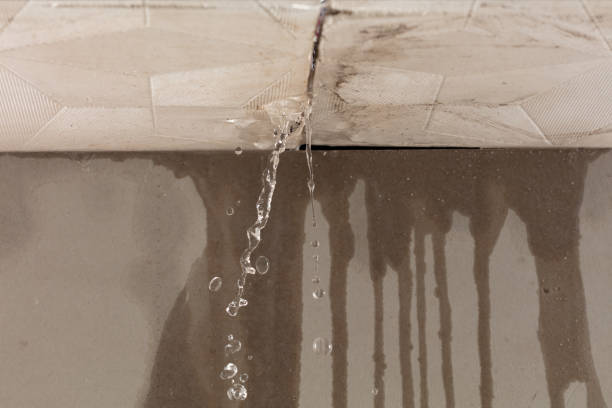
An unexplained jump in your water bill is frequently the first sign of a slab leak or a failing supply line long before any visible water appears. Catching it at this stage is far cheaper than waiting for a visible flood.
Bubbling near a window or exterior wall frequently points to a flashing or seal failure letting water into the wall cavity a little at a time.
Any visible mold, even a small patch in a corner or along a baseboard, means conditions behind that surface have supported growth for a while and the moisture source needs to be found, not just the mold wiped away.
Our Emergency Water Damage process covers every stage of a water loss, from the first extraction pass to the final coat of paint, so you're never left coordinating separate contractors mid-project.
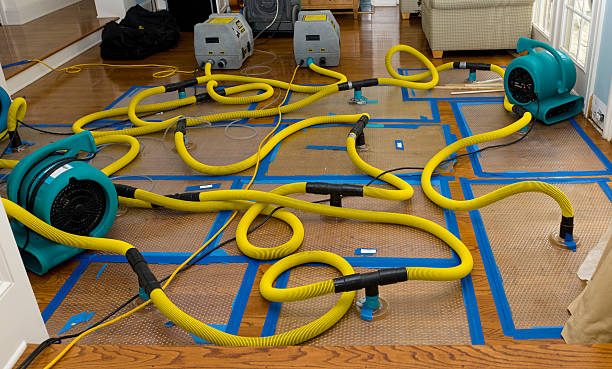
Standing water gets removed with commercial extraction equipment first, then we run moisture readings across every affected surface so the drying plan targets what's actually still wet, not what looks dry on the surface.
We place industrial air movers and low-grain-refrigerant dehumidifiers based on psychrometric readings, then log moisture levels daily until every affected material returns to a safe drying standard.
Category 3 blackwater intrusions require full PPE, controlled demolition of porous materials that can't be sanitized, and hospital-grade antimicrobial treatment before reconstruction begins.
Once structural drying is underway, we apply antimicrobial treatments to studs, subfloor, and other porous surfaces to stop mold colonies before they establish, especially in areas that stayed wet more than 48 hours.
We handle everything from replacing water-damaged drywall and insulation to refinishing floors, so the property is restored to pre-loss condition under one contract instead of three.
Specialized cleaning techniques can often save upholstery, electronics, and documents that look like a total loss at first glance, which keeps out-of-pocket replacement costs down.


You call +1-844-578-1604 and speak with a live dispatcher, not a voicemail system — we ask a few quick questions about the source and severity so the crew arrives prepared.
Technicians arrive with moisture meters and thermal cameras to map exactly how far the water has traveled, including inside walls and under flooring where you can't see it.
Extraction and drying run as one continuous process rather than two separate visits, which keeps the timeline tighter.
Final verification is where a lot of shortcuts get taken industry-wide — we treat it as mandatory, not optional.
Every technician carries IICRC certification and our crews are fully insured for your protection on every job.
Local staging means shorter drive times, which matters most in the first hour after a water loss.
We'd rather explain the cost clearly upfront than have that conversation after the job is already underway.
A guarantee only means something if it's backed by a second set of moisture readings, not just a handshake at the end of the visit.
We'd rather run drying equipment an extra day at our own cost than close out a job with a moisture reading we're not confident in.
Our technicians don't get paid faster by closing jobs early, which keeps the incentive aligned with actually finishing the drying properly.
Call +1-844-578-1604Our Connecticut, CT coverage spans every major population center, with local dispatch handling the routing so response times stay consistent statewide.
As Connecticut, CT grows, so does our crew count — we add regional capacity rather than stretching one central office thinner.

"A pipe burst behind our water heater and the crew here in Connecticut, CT had extraction units running within 40 minutes of my call. They walked me through the moisture readings every day until it was fully dry."
James R., Connecticut, CT"They caught mold starting behind our drywall before it spread and contained it properly instead of just painting over the problem like a previous contractor did."
Denise M., Connecticut, CT"Professional from the first phone call to the final walkthrough. They re-tested moisture levels before closing the job instead of just eyeballing it."
Marcus T., Connecticut, CT"Fast response, clear pricing, and they coordinated directly with my insurance adjuster which saved me a huge headache during a stressful week."
Priya S., Connecticut, CT"Drying logs were shared with us daily so we always knew exactly where the job stood, not just a vague 'it's drying' update."
Carlos V., Connecticut, CT"They minimized business disruption by sectioning off the wet area instead of shutting down the whole space during drying."
Angela F., Connecticut, CT"The tech explained exactly which boards needed to come out and which ones tested dry enough to keep, so we didn't pay to replace more than necessary."
Tyrone B., Connecticut, CT"They explained the sump discharge issue causing our crawl space flooding in plain terms and fixed it as part of the same visit instead of scheduling a separate appointment."
Wendy K., Connecticut, CT